Introduction of Visualforce
Visualforce is a UI framework that lets you make dynamic, reusable interfaces. Salesforce's Force.com Platform as a Service (PaaS) offering includes the Visualforce framework, which is intended to facilitate the creation and deployment of cloud apps and websites.
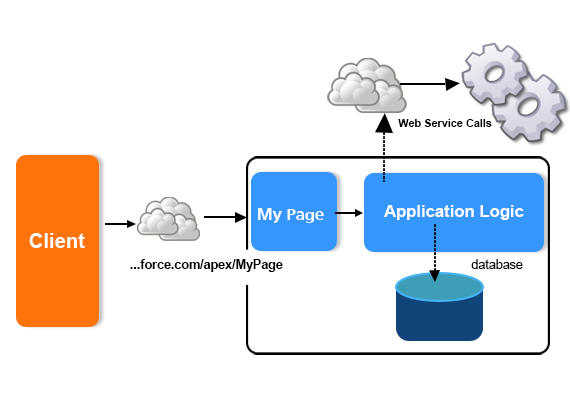
Pages are defined by developers by defining Visualforce mark-up and a Visualforce controller. The tag-based markup language used by Visualforce looks and performs similarly to HTML. The markup incorporates tags and web-enabled languages such as HTML and JavaScript into a single apex:page> tag. The Visualforce mark-up determines which items display on the page and in what order. Visualforce tags are associated with page components such as form fields and pictures.
Controllers are instructions that describe what occurs when users interact with page components, such as clicking a button. The standard logic for Salesforce pages can control page components, or developers can attach their logic using a controller class. Server-side standard controllers make fundamental database operations like queries and changes easier.
Visualforce Mark-up
Visualforce mark-up is made up of Visualforce tags, HTML, JavaScript, or any other Web-enabled code that is contained within an apex:page> element. The markup specifies which user interface components should be included on the page and how they should be displayed. Learn more about them only on our Visualforce assignment help.
Visualforce Controllers
A Visualforce controller is a collection of instructions that explain what occurs when a user interacts with the components provided in the related Visualforce mark-up, such as clicking a button or link. Controllers can also adjust component behaviour and offer access to the data that should be shown on a page.
 Australia
  UK
UK World
World





 3 Bellbridge Dr, Hoppers Crossing, Melbourne VIC 3029