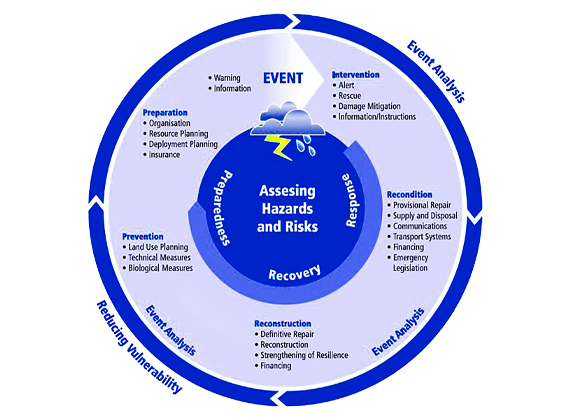
Managing Natural Hazards includes the total of all programs, activities, and measures that should be taken up before, during, or after natural hazards to avoid them, minimize their impact, or recover from the losses. It includes the basic understanding of processes that cause the hazards, assessment of the hazards, monitoring and observing the changes in situations that can determine the status of potential hazards, and providing information to a wider community for evaluating the need for action.
How to Manage Natural Hazards?
Education, awareness, prediction, and preparedness can minimize the disruptive effects of natural hazards. The mitigation measures including adoption of land-use practices, zoning, and building codes are required to reduce or prevent damage from natural hazards.
Avoid development in the flood-prone and landslide areas via zoning and planning ordinances. You might save money in construction and minimize the loss of life as well as damage to natural and property resources. The community investment pays dividends if there is a natural hazard.
Progress for adopting management practices shall need community commitment, recognizing barriers and constraints, and innovative solutions. The flood-prone places may be included in community-improving wildlife, open space, or physical fitness.
 Australia
  UK
UK World
World





 3 Bellbridge Dr, Hoppers Crossing, Melbourne VIC 3029