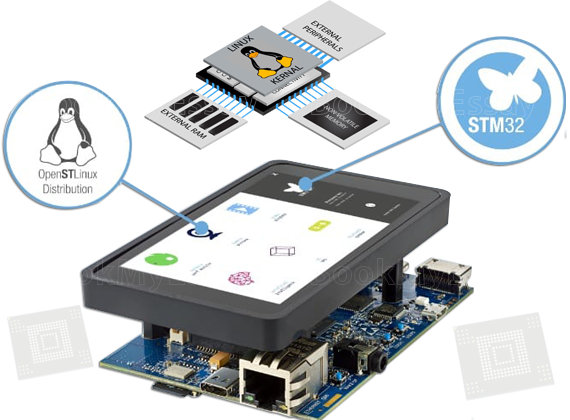
Though it uses the same kernel like Linux, it is very different from a standard Linux OS. This is customized specifically for embedded systems. As it has a smaller size, it needs minimal features and needs less processing power. Depending on the needs of an embedded system, the kernel is optimised and modified as the embedded Linux version.
Android OS is a kind of embedded Linux and is customized for use on smartphones. The other devices embedded devices are used include wireless routers, smart TVs, navigation devices, tablet PCs, and other consumers electronic and industrial equipment. We, at BookMyEssay offer academic writing services such as: Embedded Linux assignment help at premium rates.
The Advantages of Embedded Linux
There are a lot of benefits of Embedded Linux that are discussed in our Embedded Linux assignment help in Australia as follows:
- Vendor independent: If you use Linux, you are not dependent on a specific vendor for supplying tools. All things are available from an open-source community. The service models of Linux vendors is the same that they use to offer Linux libraries, kernel, etc. Users can switch from one vendor to another vendor. If users want to go minus vendor, all things are available freely.
- Used tools are easily available: In an embedded Linux, a lot of development utilities and tools are available easily. Users can download these tools and use them freely. This results in quick development time for the embedded products.
- Different hardware support: The Linux community is highly active. They add support of new hardware regularly. It is used in different universities and research laboratories all across the globe and thus Linux is always updated along with the newest hardware support.
- Low-cost development: When you use an embedded Linux, you can develop low-cost products. The tools of Linux development and easily available and free. It is royalty-free and you do not have to pay any royalty to make several products.
The Benefits of an Embedded Linux
Embedded Linux is a popular application and it is prevalent for all enterprise server platforms. It is free and open-source along with source code that is distributed by an Open Source and Free Software community. It is a perfect match for embedded applications because of the networking and stability ability. This is highly stable and used by a huge number of programmers and it enables developers for programming hardware.
There are a few general-purpose and popular Linus distributions. They are Read Hat. It can be downloaded from the websites of vendors. The benefits are discussed in our Embedded Linux case study help.
 Australia
  UK
UK World
World





 3 Bellbridge Dr, Hoppers Crossing, Melbourne VIC 3029