It utilizes a Transfer Function Measurement process for comparing the output of a room and loudspeaker combination to an input signal that is filtered pseudorandom noise. As the sound takes time from an exit point to a measurement device, any delay should be put inside in a reference signal for compensation. The delay is found in software to help in a practical measurement. The supported platforms include Mac OS X and Linus as it depends on POSIX Threads. This is written with floating-point processing thus making the embedded Linux device support highly difficult.
The Benefits of BRP-PACU
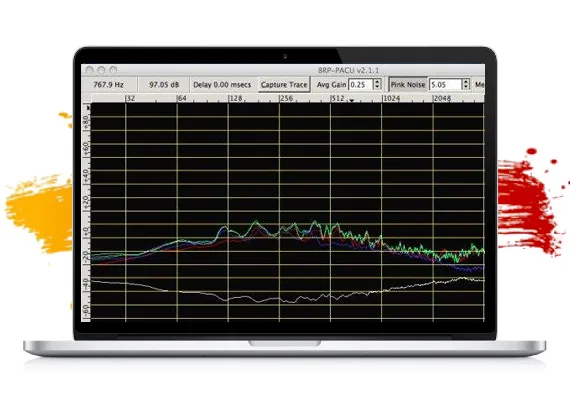
BRP-PACU is a great platform, which performs as an FFT dual-channel audio analysis tool. This is designed especially for researchers, engineers, and others, who want to get thorough detail of sound. Users can analyze the sound through sound information such as the volume, intensity, intonation, and several complicated ones.
This platform has a unique Pink Noise generation tool, which fulfils the requirement or need of the outside Pink Noise source. It is a versatile platform that uses JACK for managing and routing audio paths with a lot of comfort and ease.
It has an advanced in-built system, that captures impulse responses instantly of sound without much effort. It provides four capture buffers, which has excellent functionality and the ability to save-as and auto-save. Further, it leverages the unique and huge facility of an automatic delay calculation.
The project is made for engineers who configure the professional audio system. The main feature shall have the ability to take several transfer function plots, average them, and then flip an average plot for helping in final equalization. Most professional audio engineers utilize this function instead of real Time Analysis as it is precise and quicker. It is a quick and powerful technique, however, difficult to perform and master.
 Australia
 UK
 World





 3 Bellbridge Dr, Hoppers Crossing, Melbourne VIC 3029