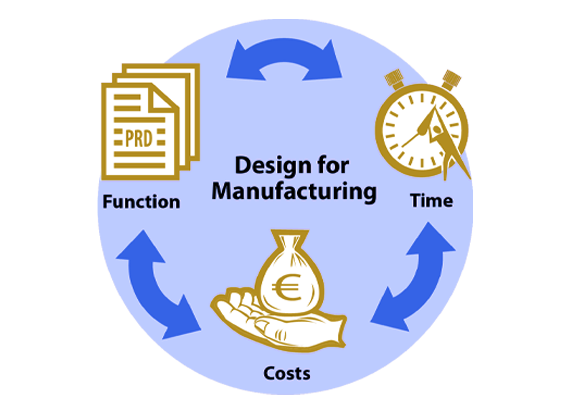
DFM is done for optimizing, simplifying, and refining the design of the product. The acronym Design for Manufacturing and Assembly or DFMA is at times utilized interchangeably with DFM.
Students always come to us for getting Manufacturing Design assignment help because our assignment help tutors never forget to follow any guideline which has been mentioned for an paper.
The Principles that are Examined at the Time of a DFM
5 principles that get examined at the time of a DFM are:
- Design
- Process
- Environment
- Material
- Testing or Compliance
Commonly, DFM is needed to happen early during the process of design, and before tooling has started. Additionally, a well-executed DFM requires comprising every stakeholder and it comprises designers, engineers, mold builders, contract manufacturers, and material suppliers. The mission of the “cross-functional manufacturing design is challenging the design, for looking at all the designs at every level, like system, sub-system, component, and also holistic levels.
This ensures that the designs have been optimized and don’t possess undesired price embedded in them. When the design advances via the life cycle of a product, alterations turn highly expensive. It becomes tougher for implementing too.
Importance of Manufacturing Design
Reduction in cost – Nearly 70 percent of the costs of a product’s manufacturing is derived from some design decisions, such as components and the method of manufacturing. The remaining 30 percent of the prices make up the decisions of production, such as tool selection and process planning.
Streamlined scale-up of production – When DFM is considered right from the starting of the cycle of product development then it lessens redesign work, augment the quality of products, and also speeds up people’s time to market.
 Australia
 UK
 World





 3 Bellbridge Dr, Hoppers Crossing, Melbourne VIC 3029